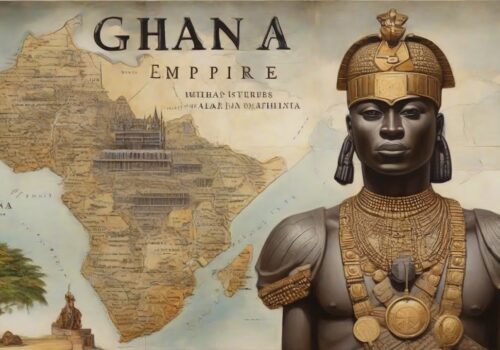
The Rise of the Ghana Empire (c. 300–1200 CE) – The First Great Power of West Africa
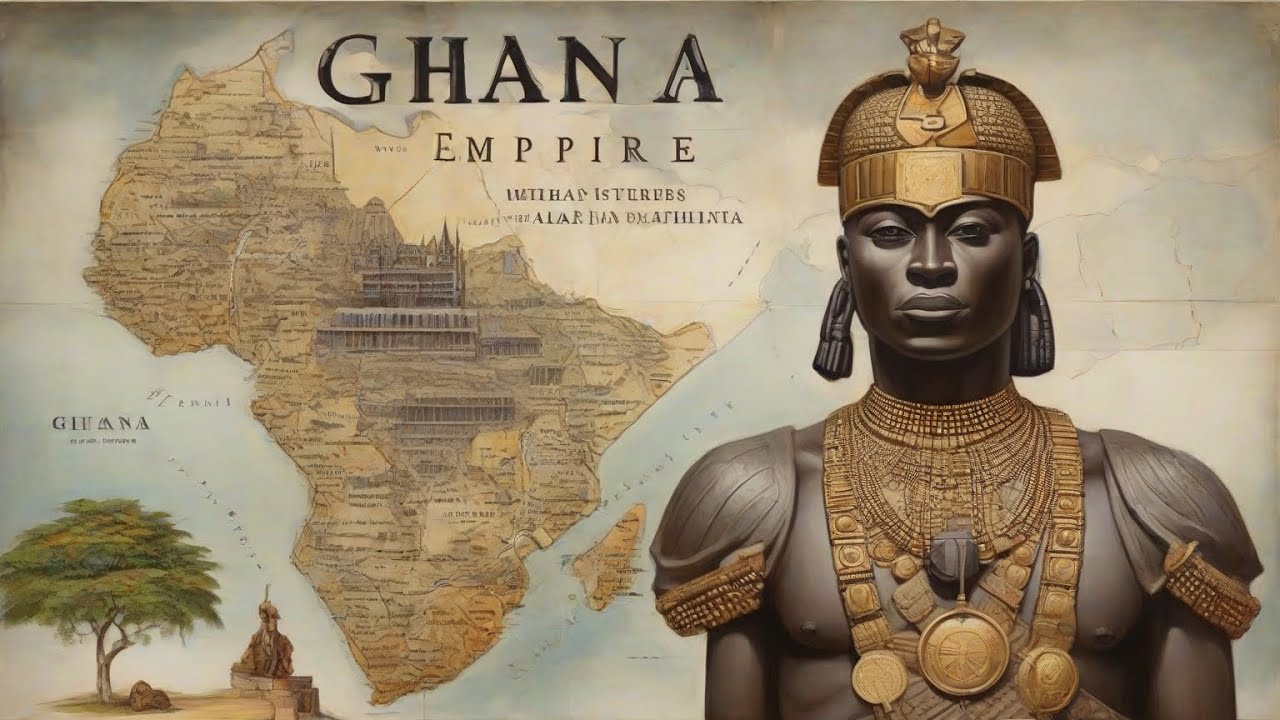
Introduction: Reclaiming Africa’s Early Statecraft
When modern Ghana became independent in 1957, its leaders deliberately chose the name “Ghana” to evoke a powerful African past. That choice was neither accidental nor symbolic rhetoric—it was historical reclamation.
Centuries before European ships reached the Gold Coast, before colonial borders were drawn, and before the Atlantic slave trade reshaped the region, West Africa was home to powerful, centralized states. The Ghana Empire was the earliest of these great Sahelian empires.
Flourishing roughly between 300 and 1200 CE, the Ghana Empire established political institutions, economic systems, and military structures that would shape West African history for centuries.
- Geography: The Strategic Genius of Location
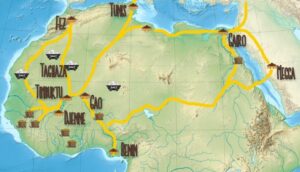
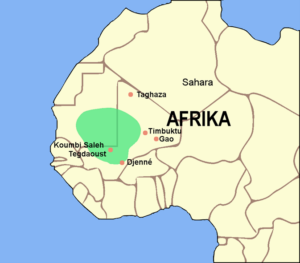
The Ghana Empire emerged in the Sahel, the ecological zone between the Sahara Desert and the West African forest belt.
This was not accidental geography—it was strategic positioning.
The Three-Zone Advantage
- North – Sahara Desert
- Salt mines (especially Taghaza)
- Berber traders
- Camel caravans
- Central – Sahel
- Pastoral zones
- Trade staging centers
- Political control hubs
- South – Forest Regions
- Gold deposits (Bambuk & Bure)
- Agricultural production
By the 3rd–4th centuries CE, the domesticated camel revolutionized desert travel. What had once been nearly impassable terrain became a commercial highway.
The Ghana Empire controlled the midpoint of this highway.
It did not need to mine gold directly; it only needed to control its movement.
- Origins of the Soninke State
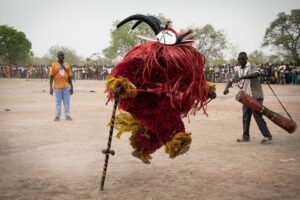
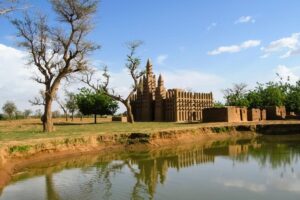
The Ghana Empire was founded by the Soninke people, part of the larger Mandé cultural group.
Archaeological evidence suggests that proto-state formations existed in the region as early as the 4th century CE. Over time, clan-based communities consolidated into centralized authority.
The empire’s capital is widely identified as Kumbi Saleh.
Description of Kumbi Saleh
According to the 11th-century geographer Al-Bakri:
- The city consisted of two towns
- One predominantly Muslim (merchant district)
- One royal and traditional
This dual structure demonstrates early religious pluralism and administrative sophistication.[1]
- Political Structure and Kingship
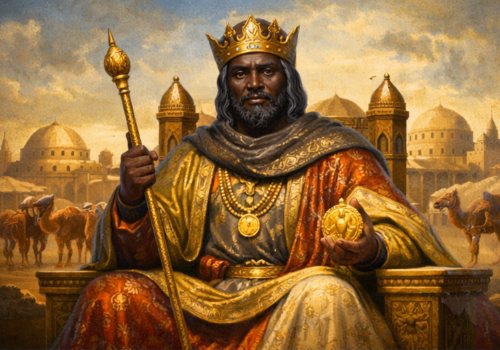
The ruler bore the title “Ghana”, meaning “War King.”
Central Authority
The king exercised:
- Judicial power
- Military command
- Religious authority
- Economic oversight
The royal court was highly ceremonial.
Al-Bakri describes:
- Gold-adorned attire
- Guard dogs with golden collars
- Formal court rituals
Though some descriptions may be exaggerated, they reflect perceptions of immense wealth and authority.
Succession
The system was matrilineal—succession often passed through the king’s sister’s son. This strengthened clan alliances and stabilized royal lineage.
- The Trans-Saharan Trade System
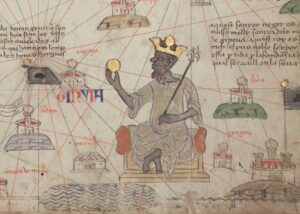
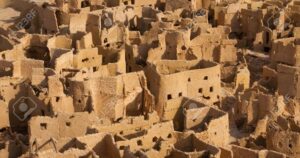
The Ghana Empire’s wealth derived from taxation, not extraction.
The Gold–Salt Exchange
Gold:
- Mined in Bambuk and Bure
- Transported north
Salt:
- Mined in Taghaza
- Transported south
Salt was essential for food preservation and survival in tropical climates. In forest regions, it could equal gold in value.
Taxation Model
- Import tax
- Export tax
- Royal monopoly on gold nuggets
Gold dust circulated freely; nuggets were reserved for the king.
This system prevented inflation and preserved royal authority.
Some historians estimate that by 1000 CE, Ghana controlled much of West Africa’s gold exports to the Mediterranean world.[2]
- Military Organization
Though exact numbers are debated, Arabic sources claim Ghana could field 200,000 soldiers.
Even if exaggerated, it suggests:
- Large population base
- Organized military hierarchy
- Strategic cavalry use
The empire’s army protected trade routes and suppressed rebellion among tributary states.
Military power underpinned economic dominance.
- Religion: Indigenous Spirituality and Islam
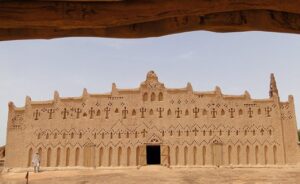
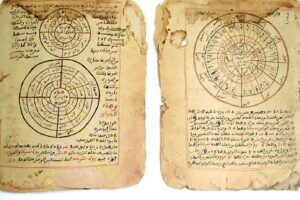
Religion in Ghana was characterized by coexistence.
Traditional Beliefs
- Ancestor veneration
- Sacred groves
- Spiritual kingship
The king was believed to hold divine favor essential for rainfall and prosperity.
Islamic Influence
Muslim merchants settled in the capital.
Islam provided:
- Literacy in Arabic
- Diplomatic networks
- Access to Mediterranean markets
Importantly, early Ghanaian rulers did not convert to Islam, preserving indigenous legitimacy while benefiting from Islamic trade networks.
- Social Organization
Ghanaian society was stratified.
Social Classes
- Royal family
- Nobility
- Merchants
- Artisans (goldsmiths, blacksmiths)
- Farmers
- Enslaved laborers
Slavery existed but functioned differently from later Atlantic chattel slavery. Enslaved individuals could integrate into households and military systems.
- Environmental and Economic Pressures
By the 11th century, signs of strain emerged.
Environmental Stress
- Overgrazing
- Possible desertification
- Reduced agricultural productivity
Trade Route Diversification
New routes reduced Ghana’s monopoly.
Economic centralization weakened.
- The Almoravid Question
Some historians argue that the Almoravids—a North African Islamic reform movement—invaded Ghana around 1076.
Modern scholarship questions the scale of this invasion.
Evidence suggests:
- Possible raids
- Trade disruption
- Religious tension
But likely no total military destruction.[3]
Instead, decline appears gradual.
- Transition to Mali
By the 13th century:
- Tributary states gained autonomy
- Gold trade shifted southward
- Political cohesion dissolved
The Mali Empire would soon rise, inheriting Ghana’s trade networks and imperial model.
- Historiography: Sources and Limitations
Our knowledge of Ghana comes primarily from:
- Arabic geographers (Al-Bakri, Al-Idrisi)
- Archaeological excavation
- Oral tradition
Absence of indigenous written records complicates reconstruction.
Modern historians must balance:
- External textual accounts
- Material culture
- Oral narratives
This makes Ghana one of the most fascinating cases of African historiography.
Timeline Summary
| Date | Event |
| c. 300 CE | Early Soninke consolidation |
| c. 800 CE | Trade dominance peaks |
| 1067 CE | Al-Bakri documents Ghana |
| 1076 CE | Almoravid pressure |
| c. 1200 CE | Political decline |
Why the Ghana Empire Still Matters
The Ghana Empire demonstrates:
- African state formation preceded Europe’s rise
- Taxation and bureaucratic governance were indigenous innovations
- West Africa was integrated into global trade networks
When independence leaders reclaimed the name “Ghana,” they were reclaiming civilizational legitimacy.
The ancient empire symbolized African political capability long before colonialism.
Frequently Asked Questions
Was ancient Ghana located in modern Ghana?
No. It was in present-day Mauritania and Mali.
How did Ghana become wealthy?
Through taxation of gold and salt trade routes.
Did Islam dominate Ghana?
No. Islam coexisted with indigenous religion.
Footnotes
[1] Al-Bakri, Book of Roads and Kingdoms, 11th century.
[2] Levtzion & Hopkins, Corpus of Early Arabic Sources for West African History.
[3] Conrad, David C., “A Town Called Dakajalan,” Journal of African History.
References
Davidson, Basil. Africa in History.
Levtzion, Nehemia. Ancient Ghana and Mali.
Hopkins, J.F.P. Corpus of Early Arabic Sources for West African History.
Shinnie, P.L. Ancient African Kingdoms.