The Zenith of West African Statecraft: An Analysis of the Songhai Empire (c. 1464–1591)
After Mali’s decline, Songhai rose to dominate West Africa. Discover how it became the largest empire in regional history—and why it collapsed.
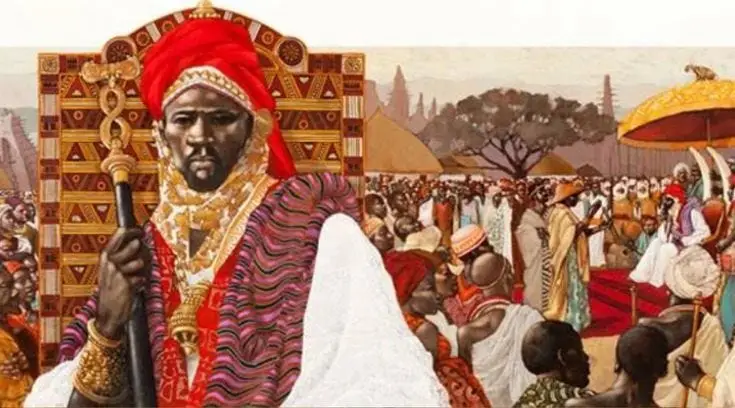
The Songhai Empire (c. 1464–1591) represents the apex of indigenous imperial administration and intellectual achievement in pre-colonial West Africa. Emerging from the decline of the Mali Empire, Songhai transitioned from a small riverine kingdom centered in Gao to a massive hegemon that controlled the vital trans-Saharan trade routes.
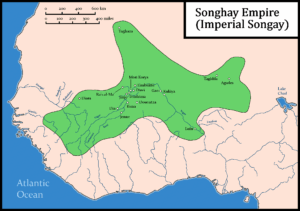
As Mali weakened in the 15th century, the city of Gao became the center of a rising power. The Songhai Empire would grow to surpass both Ghana and Mali in territorial reach.
Rise to Hegemony: The Sunni and Askia Dynasties#
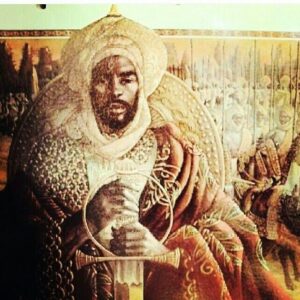
Sonni Ali
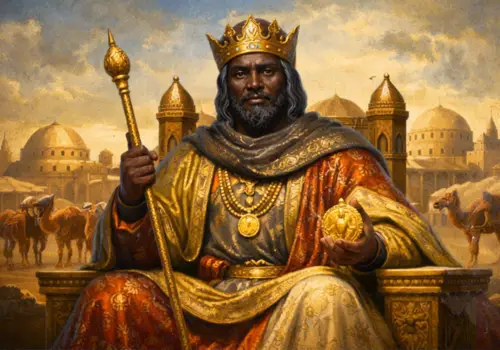
The evolution of Songhai into an imperial power was catalyzed by Sunni Ali Ber (r. 1464–1492). Unlike his predecessors, Ali utilized a sophisticated riverine navy and a swift cavalry to seize key urban centers, including Timbuktu (1468) and Jenne (1473) [1].
However, the empire reached its administrative maturity under Askia Muhammad I (Askia the Great). After seizing power in 1493, Muhammad replaced the traditional military-style rule with a complex bureaucracy. He divided the empire into provinces, each overseen by a fari (governor), and appointed specialized ministers to oversee finance, agriculture, and justice.
- Economic Foundation and Trade
The stability of the Songhai state was inextricably linked to its control of the trans-Saharan trade. The empire functioned as a middleman between the gold-producing regions of the south and the salt-rich mines of the Sahara (such as Taghaza).
- Standardization: Askia Muhammad is credited with standardizing weights and measures across the empire, which reduced friction in trade and increased tax efficiency [2].
- Agriculture: The Niger River served as the empire’s lifeblood. The state employed a system of “slave farms” or royal estates to ensure a consistent food surplus for the urban centers and the standing army.
Intellectual and Religious Life#
Songhai was not merely a military power; it was the intellectual hub of the Islamic world in Africa. Timbuktu became synonymous with scholarship, housing the University of Sankore and hundreds of madrasas.
“The consumption of books in Timbuktu was so high that the trade in manuscripts was often more profitable than the trade in gold or salt.” [3]
While the ruling elite practiced Islam—often using it to legitimize their rule and forge diplomatic ties with North Africa—the rural populations largely maintained traditional African religious practices. This religious syncretism was a hallmark of Songhai social fabric until the late 16th century.
Collapse: The Battle of Tondibi#
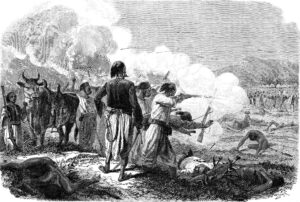
The fall of Songhai was as rapid as its rise. In 1591, the Saadi Dynasty of Morocco, seeking to control the gold trade, dispatched an expeditionary force across the Sahara. Despite being vastly outnumbered, the Moroccan forces possessed arquebuses (early firearms), which decimated the traditional Songhai spear and bow infantry at the Battle of Tondibi [4].
The subsequent sack of Gao and Timbuktu led to the fracturing of the empire into smaller, competing polities, effectively ending the era of the great West African empires.
Footnotes#
[1] Hunwick, J. O. Timbuktu and the Songhay Empire. Brill, 2003, p. 26.
[2] Gomez, M. A. African Dominion: A New History of Empire in Early and Medieval West Africa. Princeton University Press, 2018, p. 342.
[3] Cissoko, S. M. Tombouctou et l’Empire Songhay. L’Harmattan, 1996, p. 89.
[4] Thornton, J. K. Warfare in Atlantic Africa, 1500–1800. UCL Press, 1999, p. 23.
References
- Gomez, Michael A. African Dominion: A New History of Empire in Early and Medieval West Africa. Princeton: Princeton University Press, 2018.
- Hunwick, John O. Timbuktu and the Songhay Empire: Al-Sa’di’s Ta’rikh al-Sudan down to 1613. Leiden: Brill, 2003.
- Levtzion, Nehemia. Ancient Ghana and Mali. London: Methuen, 1973.
- Sa’di, Abd al-Rahman. Tarikh al-Sudan. (The primary historical chronicle of the region).